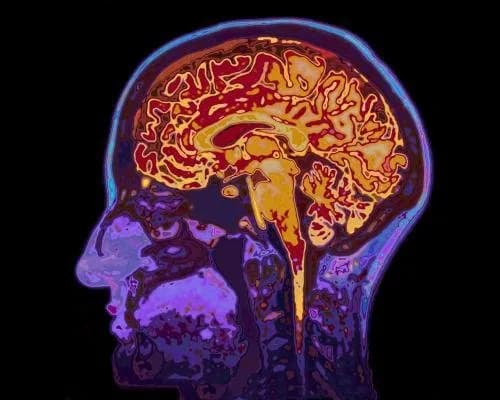
I made my husband ill with a few words – nobody is immune to the power of the nocebo effect
Originally from The Guardian. Read the original article on the publisher’s site.
My prank demonstrated how our minds can adversely affect our health, and scientists are increasingly showing that negative thoughts can produce very real symptoms.
For his last birthday, I gave my husband a monthly beer box subscription. While he saw it as a generous and delicious present, it spawned a mischievous idea on my part. One evening, as I watched him drain the last bottle, I opened my email. “We’ve just had a message from the beer people,” I said. “They’re issuing a recall on the last batch.”
“What’s the problem?” he answered. “Some sort of contamination issue,” I replied. My husband’s face fell. “Are you OK? You look a bit peaky,” I said.
“Actually, I feel a bit sick,” he said.
There was, of course, no email, and I am a terrible wife. For the past few years, I’ve been writing a book, This Book May Cause Side Effects, about how our thoughts influence ill health. You may have heard of the placebo effect, when positive expectations lead to positive health outcomes. But my interest is in its evil twin. The nocebo effect occurs when dismal expectations lead to negative health outcomes. The phenomenon can create, exacerbate and prolong symptoms. When these symptoms coalesce, people become ill – not from disease, but from the intimate relationship that exists between mind and body.
The beer box ruse was a crude experiment. I wanted to see how easy it is to conjure the nocebo effect – and the answer is “very”. Sometimes, all it takes to make someone feel genuinely unwell is a few carefully chosen words.
You don’t just have to take my word for it. There is a plethora of peer-reviewed studies confirming this idea. In one, patients fresh from minor keyhole surgery received a harmless saline infusion that they were told would temporarily increase their pain. It did just that. In another, 40 asthmatic adults breathed in water vapour from an inhaler they were told contained an irritant. Nineteen went on to feel wheezy. Twelve had a full-blown asthma attack.
These are artificial situations, but the nocebo effect is out there in the real world too. Whenever we have negative expectations about health, they can generate a self-fulfilling prophecy.
If you’ve ever developed side-effects to a prescription medication, it's possible the phenomenon was responsible for at least part of your suffering. The nocebo effect can also be part of the reason why some people find it hard to tolerate gluten. Blinded to their diet and covertly fed the offending ingredient, some find they can eat regular bread without incident.
The nocebo effect affects us individually, but it can also occur at the level of populations when it spreads like a virus. The phenomenon may be the driving force behind countless seemingly inexplicable “mystery illnesses” – from the dancing plagues of the Middle Ages to the more recent phenomenon of Havana syndrome, where American diplomats have developed intense symptoms after believing they were struck down by some sort of unidentified covert weapon. During the pandemic, the nocebo effect was responsible for an outbreak of tics that was propagated when young people saw videos of them on TikTok. It became known, fittingly, as the TikTok tics. Now, researchers believe we live in era in which, increasingly, social media are turbocharging the spread of nocebo-generated symptoms .
I believe that the nocebo effect is also responsible for a significant proportion of “medically unexplained symptoms” – sensations such as pain, fatigue and dizziness that cause suffering yet have no discernible organic cause. In the absence of a “proper diagnosis”, people with these symptoms are often accused of being “hypochondriacs”. This is an outdated term that has rightly been dropped by the medical profession because it implies that suffering is feigned or exaggerated. Similarly, in writing my book, I’ve received pushback from those who believe that nocebo-generated symptoms either don’t exist or are somehow less valid than “real” symptoms.
This view is categorically wrong. And if the experiences of those who suffer from them aren’t enough, I point towards the detailed body of literature showing that thoughts and neural activity can and do precipitate physical change.
The work of Harvard’s Ellen Langer has shown, for example, that when people with diabetes are made to sit in front of a clock that runs at double, regular or half speed, their blood glucose levels rise and fall with the perceived passing of time, rather than the actual passing of time. Alia Crum at Stanford has shown that when people drink identical milkshakes labelled as “high-calorie” or “diet”, levels of the “hunger hormone” ghrelin drop three times faster after consuming the drink they believed would make them fuller faster.
Animal studies go further still, mapping out the chain of events that link activity in the brain to sometimes dramatic effects in the body. Asya Rolls from the Technion-Israel Institute of Technology and colleagues have shown that activating specific brain areas in mice triggers changes to the immune system, which can then speed the recovery from heart attacks or slow the growth of cancer. Writing in Nature Communications, they say “these findings introduce a physiological mechanism whereby the patient’s psychological state can impact anti-tumour immunity and cancer progression”. They’re not saying that negative thinking can worsen cancer, or that positive thinking can cure it – but they are saying there’s a link between neural activity and disease that deserves further exploration.
Four hundred years ago, the French philosopher René Descartes proposed that mind and body are separate, non-interacting entities. It spawned the dogma of Cartesian dualism and our modern medical model that still defaults to the premise that physical symptoms must have physical roots. While this may be true sometimes, it’s not true all the time. The work of Rolls and others hints at deeper layers of complexity.
I believe that if we truly want to be well, it’s important first to understand the many ways that we become ill. The nocebo effect – underestimated and overlooked – is a key part of this puzzle.
Helen Pilcher is a science writer and the author of This Book May Cause Side Effects
This Book May Cause Side Effects by Helen Pilcher review – can you think yourself sick? Reviewed by Farrah Jarral
In Roald Dahl’s 1980 masterpiece The Twits, Quentin Blake’s illustrations demonstrate how Mrs Twit’s horrible attitudes eventually ended up deforming her looks. “If a person has ugly thoughts,” wrote Dahl, “it begins to show on the face.”
In her latest book, science writer Helen Pilcher explores this very idea: that negative beliefs “can be physically transformative”. The nocebo effect, as this is known, comes from the Latin for “I will harm”, and strikes when a person’s negative expectations, whether subconscious or conscious, lead to illness.
This Book May Cause Side Effects is a bold attempt to examine the anatomy of this phenomenon. In its simplest form it can be described as follows: “when people are warned to expect symptoms, they become more likely to experience them”. Much like the impossible instruction not to think of a pink elephant, if you are told a drug might make you feel nauseous, it is a compelling psychological invitation to experience it.
In an analysis of 231 placebo-controlled clinical trials, Pilcher notes that 76% of people in the experimental groups reported side-effects, compared with 73% of those who were on a placebo. “Most of us experience funny sensations in the body at times,” she writes, “but the nocebo effect is behind becoming more aware of them, and misattributing them to a medication.”
Beyond drug side-effects, Pilcher’s book explores the nocebo effect as it applies to a range of human conditions including ageing, “hex deaths”, or the deaths of people who believed they had been cursed to die, and mass psychogenic illness.
History is rich with examples of mass psychogenic illness, or MPI, such as collective panic about shrinking genitalia in Asia, first recorded two millennia ago. It’s the nocebo effect at scale. While in the past the pace of symptom contagion was limited by geography, today’s lightning-fast global communication and the existence of social media platforms can make the nocebo effect go viral.
In 2014, social media is thought to have transmitted a mass psychogenic illness across Colombia. Children at a girls’ school began convulsing and fainting, having recently had the HPV vaccine, which protects against cancer of the cervix. Cases spread across the country and, although health officials found no link between the vaccine and the symptoms, public confidence in the vaccine was shattered. From HPV immunisation rates of over 90%, uptake dropped to 5%.
Whether people’s nocebo effect symptoms can ever be physically verified is largely irrelevant. Subjective experience such as pain or fatigue lies behind a veil that we are unable to penetrate. Yet, Pilcher also presents an array of research that shows measurable physical changes resulting from the nocebo effect. In one striking example, she cites a study at Stanford in which participants were randomly told – regardless of their actual genetics – that they possessed a gene associated with either low risk or high risk of obesity. GLP-1, synthetic analogues of which include Ozempic, is a natural hormone released by the body that makes us feel full. After a meal, those who were told they had the “skinny” gene showed a significant increase in GLP-1, while those told they had the “fat” gene had no change from their baseline levels.
When interviewing a researcher who inserts electrodes into the brains of cancerous mice in an area associated with reward processing and positive emotion, Pilcher is gripped by the finding that stimulating this area curbs the cancer, and dampening it makes the cancer grow faster. “This is potentially huge. It’s one thing to entertain the idea that mental processes can slow the growth of cancer,” she observes, “It’s quite another, however, to suggest that certain thoughts can make cancer worse.” Pilcher has a dog in the race, revealing on the first page that she herself has a diagnosis of cancer. Yet, despite her caveats clarifying that the stimulation of a neuron in a mouse brain is not equal to a positive thought, the seed has been planted that this is the case. There is a risk that the folk intuition that makes Mrs Twit’s metamorphosis credible in fiction – an intuition that chimes with the growing research on the nocebo effect – may feed into something morally repugnant.
Ultimately, This Book May Cause Side Effects deals with the central philosophical quandaries of humankind: how we conceptualise mind and matter, and to what extent we can shape our own destinies. While Pilcher steers away from tackling the philosophy head-on, this ambitious and fascinating book will add to our understanding of these mercurial and controversial questions. It could also help us avoid the nocebo effect in our daily lives. As side-effects go, that’s a pretty good one.
This Book May Cause Side Effects: Why Our Minds Are Making Us Sick by Helen Pilcher is published by Atlantic (£22)
This Guardian article was legally licensed by AdvisorStream.
Related Articles
Energy bills are set to rise twice — here’s what to do if you’re struggling
Energy bills will rise in October and likely again in January for those not already on fixed deals.

Why have interest rates stayed the same and what could happen next?
The Bank of England has kept rates unchanged for the sixth time in a row.
AI can forecast the future. Should we let it?
The skill of specialised AI forecasters seems indistinguishable from much-vaunted superforecasters. But there are caveats.